At about 0343 hours, Box 8-8 was sounded for a house fire at 14 Bucher John Road. First arriving Engine 81 (Captain S. Keeney) advised heavy smoke showing and that his crew would be initiating an attack. Captain Keeney also established "Bucher John Road Command". As they began to get a better view of the house, it was confirmed that fire was showing from the attic/roof area of the 2 story, ordinary construction type, single family dwelling. Chief 8-1 (Asst. Chief M. Cartwright) arrived, assumed "Bucher John Road Command" and requested the RID (Rapid Intervention Dispatch). Crews began to work the incident by stretching an 1 3/4" attack line to the attic area while another line was placed in-service as a back-up line inside the structure.
Engine 81's crew (FF Storey, FF Isonagle and FF B. Hooper) advanced into the attic to extinguish the bulk of the fire. Engine 101 picked-up Engine 81's supply line while ET-82 began setting up a dump tank for a tanker shuttle. Brush 105 established a drafting site at Little Pipe Creek for the tanker shuttle. Chief 10 also arrived as 'Command Support'.
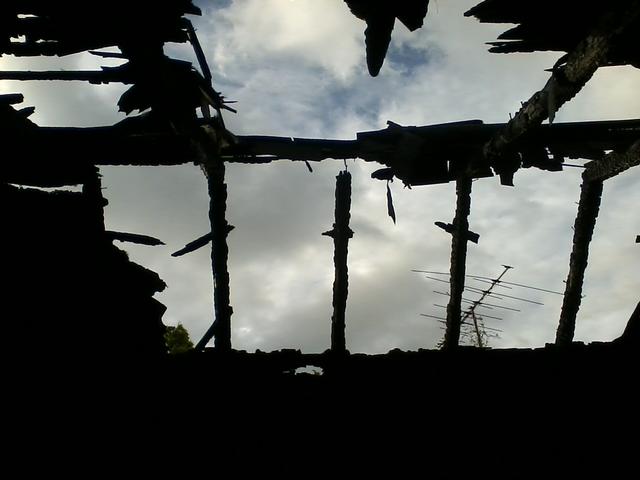
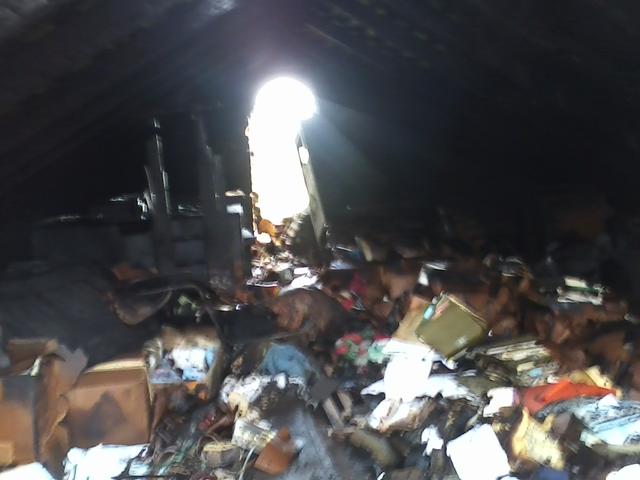
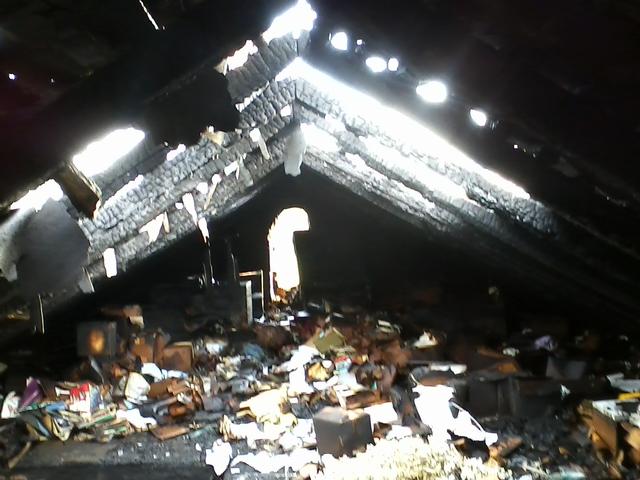
As the fire was "knocked", the crew continued to extinguish 'hot spots' in the attic along with firefighters from New Windsor. 'Division 2/Attic' (Lt. Harris) directed crews to begin pulling the ceilings on the second floor to insure that fire was not traveling in the space under the floor of the attic. The fire had burnt through the center peak of the roof (self-vented) and burned much of the stored contents in the attic. As crews pulled ceiling on the second floor, it was found that two (2) ceilings were present (One drywall/2x4 and one plaster and lathe). This forced firefighters to break through 2 ceilings to view the ceiling joists and insure that no additional fire was present in the attic floor. Additionally, crews began salvage operations on the first and second floors to reduce the amount of damage done to the home owners belongings caused by water.
Due to the amount of wires and trees surrounding the dwelling, aerial devices were not able to be used to assist with fire extinguishment or roof salvage operations. Crews from the aerial units (Tower 3 and Quint 11) assisted other companies with overhaul and salvage operations. Engine 102's crew served as the RIT (Rapid Intervention Team).
The fire was knocked down within 10 minutes and placed under control in about 20 minutes.
The Maryland State Fire Marshal's Office and Potomac Edison were called to assist with fire cause determination and to cut electrical power, respectfully. Units were placed available as many of the operations were completed and less manpower was needed during the "mop-up" of the incident.
It is estimated that about 1500 gallons of water were used during the entire incident, over 1000 gallons during "mop-up", both inside and outside of the structure. The State Fire Marshal's Office is still investigating the cause of the fire. Although the fire was quickly extinguished, the structure was left untenable. The last unit cleared at around 0830 hours.
Engine 142 (Winfield) transferred to cover Station 8 during the incident.
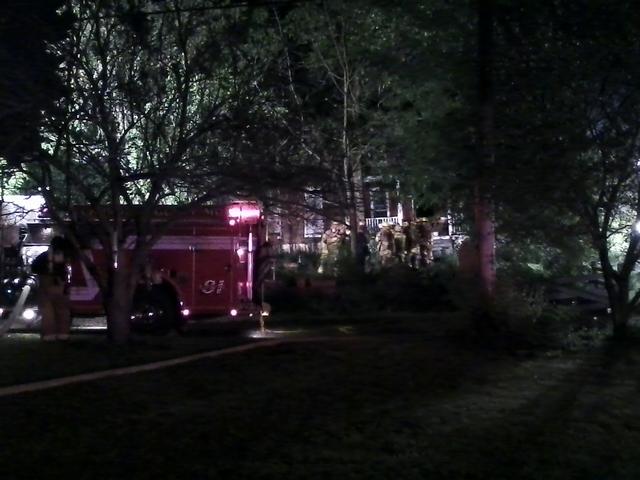
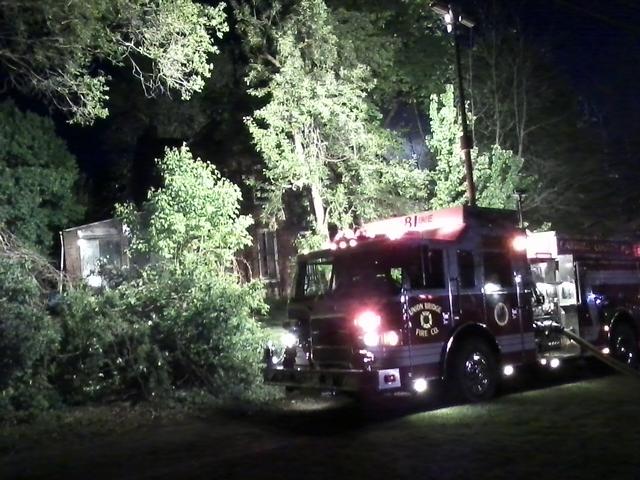
The dwelling is almost totally surrounded by trees, making aerial operations nearly impossible. Photo: C. Harris
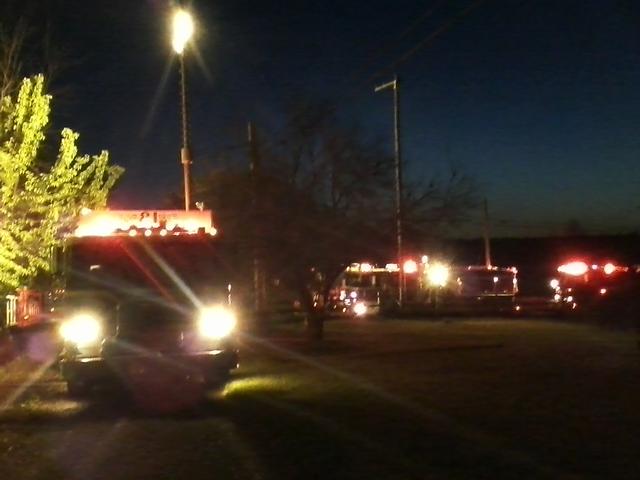
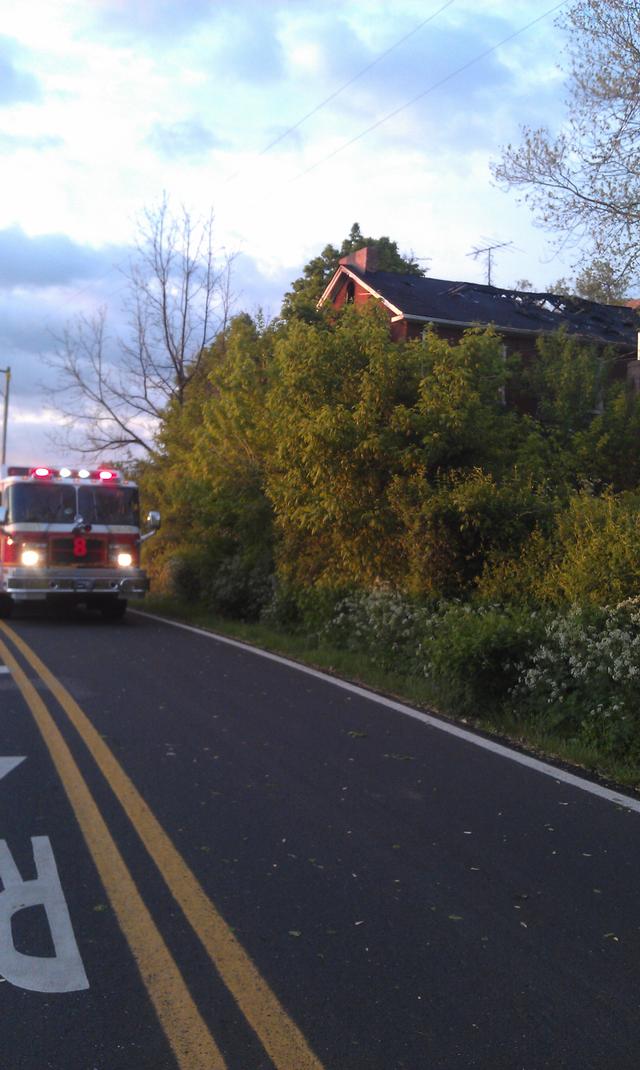
Units line-up, prepared to provide water to the fireground. Photo: C. Harris
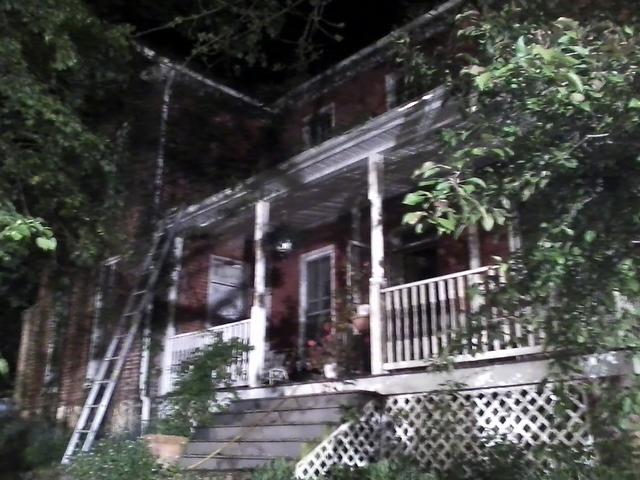
Front entrance to the house. Photo: C. Harris
FF Isonagle works in one of the attic windows as the sun rises, attempting to open the soffit up, searching for fire. Photo: C. Harris
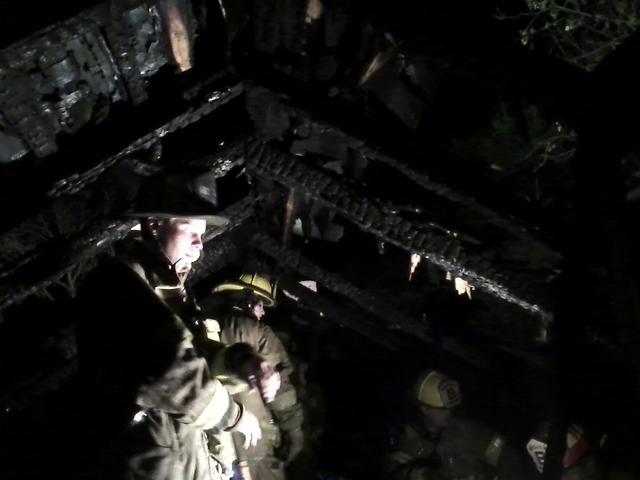
View of roof looking up from the attic stairs. Photo: C. Harris
Large amounts of content and debris were removed after the fire to insure that a rekindle does not occur. Photo: C. Harris
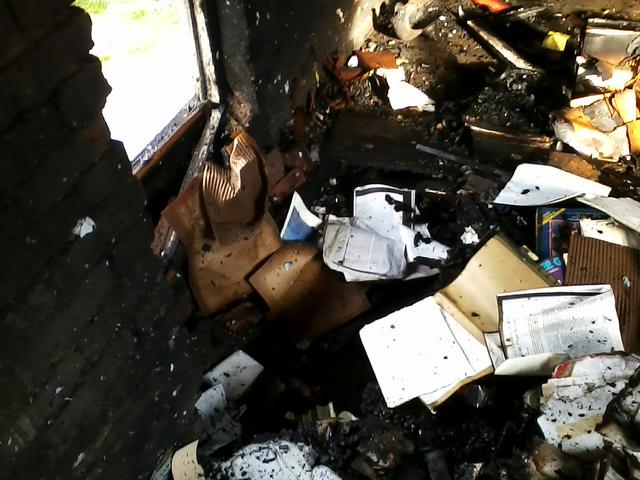
Though not all of the contents and debris were removed, plenty of water was used to insure all 'hot spots' were extinguished. Photo: C. Harris
This was one area that fire began to spread down to the second floor, but the fire was 'knocked down' before it could break-out of the second floor ceiling. Photo: C. Harris
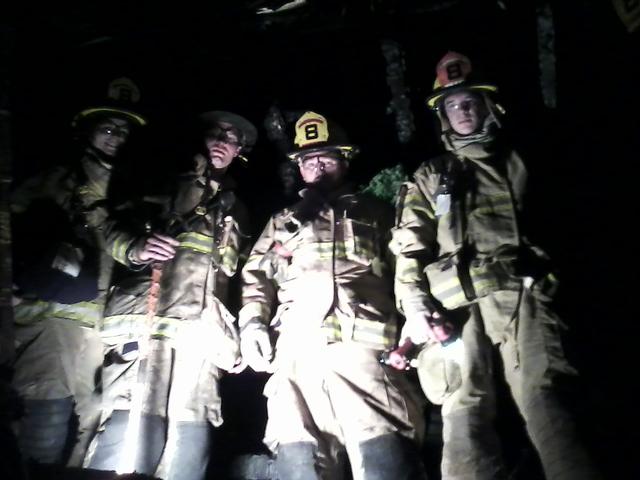
Co8 crews take a few minutes break after extinguishing some of the 'hot spots'. Photo: C. Harris
Co8 crews work to remove contents/debris after the fire was extinguished. Photo: C. Harris
View from the North side of the structure. Photo: Cody Green
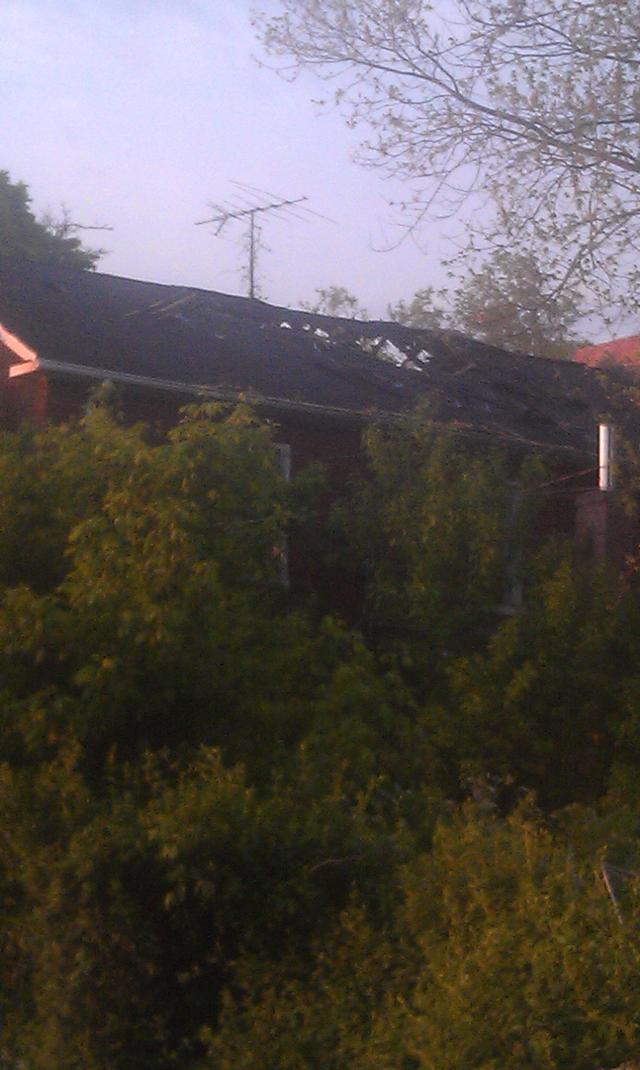
View of the roof where the fire 'self-vented'. Additional portions of the roof were removed by fire crews on the inside to provide better ventilation after the bulk of the fire was extinguished. Photo: Cody Green